

CLINICAL PHARMACOLOGY:
Mode of Action (Mechanism of Action)
HPMC consists of large macromolecules that exert a protective effect on ocular tissue during surgical procedures. It limits the mechanical damage from invasive procedures by separating and lubricating tissues .The HPMC also shows to decrease corneal endothelial cell loss during surgery. It is routinely used as an adjuvantin cataract surgery, IOL, corneal transplantation and surgery of glaucoma, etc. HPMC goes well with the lens and other corneal surfaces because of its low contact angle.
INTENDED USE
APPAVISC PFS is indicated as a surgical aid (medical device) in anterior segment surgical procedures involving the anterior chamber of the eye, including extraction of the lens and insertion of intraocular lenses. It maintains the depth of the anterior chamber during the whole surgical procedure and permits greater operative precision without the risk of damaging the endothelium of the cornea or other intraocular tissues.
CONTRAINDICATIONS
APPAVISC PFS is contraindicated in patients with glaucoma and Contraindicated in patients with known history hypersensitivity to its ingredients.
WARNINGS
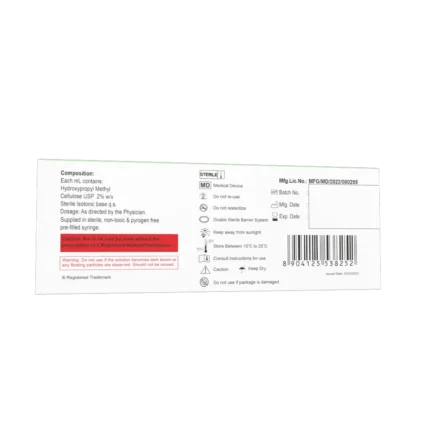
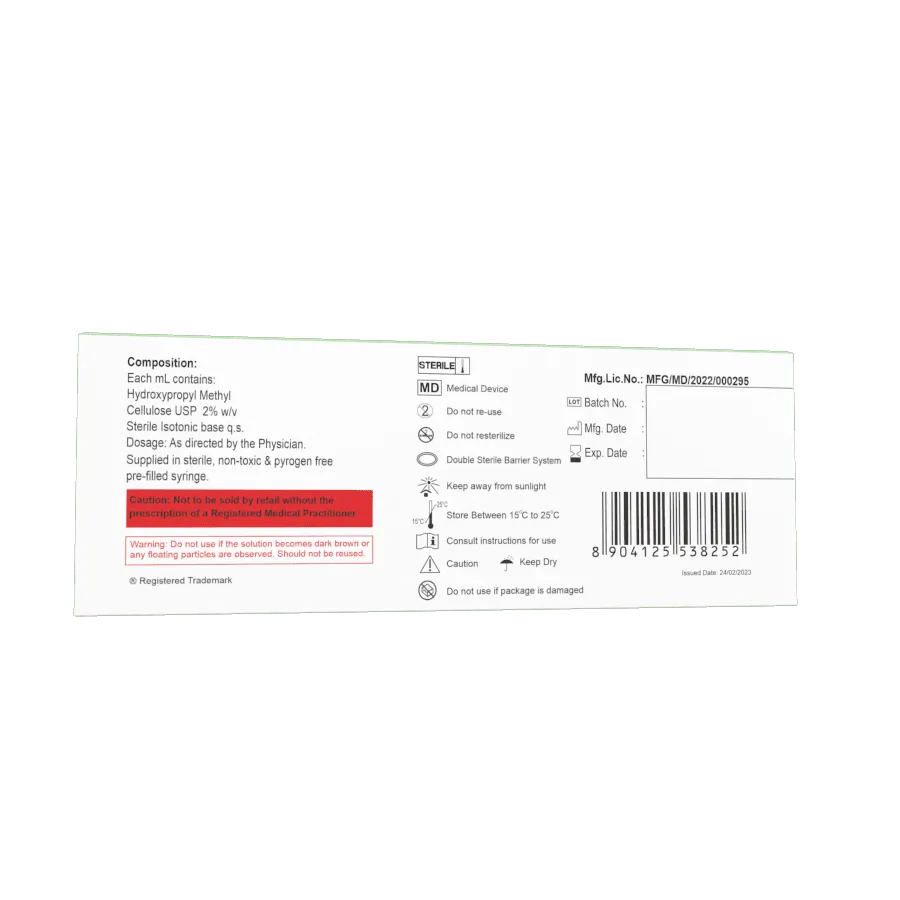
Do not use if the solution becomes dark brown or any floating particles are observed If pouch is damaged should not be reused. In-case of any serious accident in relation to the device, inform to the manufacturer and to the regulatory authority.
PRECAUTIONS:
GENERAL
Overfilling of APPAVISCPFS in anterior chamber should be avoided as it may raise IOP & cause glaucoma. APPAVISCPFS is to be removed out of eye after the surgery by irrigation or aspiration. IOP should be monitored, especially after the end of surgery. If IOP is recorded, the appropriate therapy should be employed. APPAVISC PFS should be introduced in anterior chamber such that no air bubble should be trapped in HPMC. Syringe and cannula once used should be discarded.
DRUG INTERACTIONS
Since HPMC is an inert substance and does not have any pharmacological action, no evidence suggests that the drug in intraocular milieu bind to APPAVISCPFS solution to any significant degree. There is no evidence of drug binding established so far.
PREPARATION & ADMINISTRATION GUIDE
APPAVISC PFS should be held at room temperature for approximately 30 minutes before use. Protect from freezing and exposure to light. For intraocular use
1. Remove the syringe from its packaging in a sterile environment
2.Openthe syringe, withdraw the solution using sterile disposable syringe
3. Open the cannula and firmly screw it onto the lock fitting
4. Depress the plunger and discard the first 0.1 to 0.3 ml of fluid
5.Do not overfill the eye chamber with APPAVISC PFS.6. At the closing of procedure, irrigate the bulk of the APPAVISCPFS out of the anterior chamber with Balanced Salt Solution (BSS).
SIDE EFFECTS
APPAVISC PFS has the risk of IOP elevation. The viscoelastic substances that are not removed from the eye after surgery is not degraded to any significant degree when in the anterior chamber. It obstructs the outflow mainly trabucular meshwork into schlemm’s canal. A spike of IOP is more likely to occur in early hours of surgery(maximum 4-7 hours and often returns to baseline24 hours). Residual effect of retained Viscoelastic material in anterior chamber should be considered in the differential diagnosis of corneal edema.
There is a significant cell death at 30 minutes and near complete cell deaths at 2 hours if viscoelastic reused cannulas are used. Severe corneal edema may occur if the contact time of the visco elastics with corneal endothelium by using reused cannula, following instillation, Additional events occurring includes corneal staining, keratopathy/keratitis, allergic reactions, lid edema, tearing, photophobia, corneal infiltrates, nausea and decreased vision.
DOSAGE AND ADMINISTRATION:
APPAVISC PFS (Hydroxypropyl Methyl Cellulose Ophthalmic Solution USP) should be carefully introduced into the anterior chamber using the sterile cannula. It may be applied into the chamber prior to or following delivery of intraocular lens (IOL). It may be used to coat an intraocular lens as well as tips of surgical instruments prior to implantation which protect the corneal endothelium from possible damage during cataract surgical procedure
USABILITY & INFORMATION HARZARDS
Mishandling of the product for package leads to microbial contamination of the device and post-operative inflammation. Improper removal of device from package leads to product damage and eye redness. use by unskilled personnel leads to product damage and eye redness. Inadequate irrigation &aspiration of solution leads to reversible eye infection.
PACKING
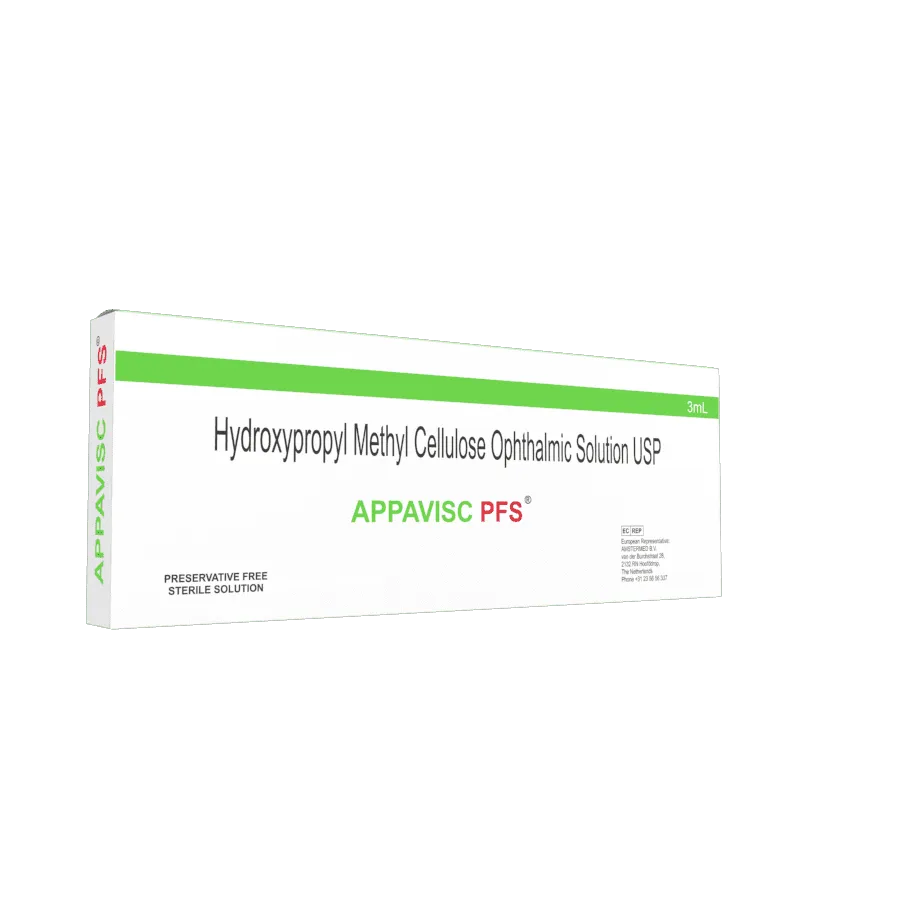
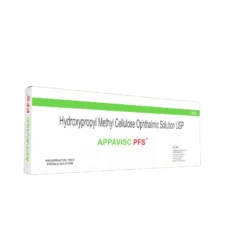
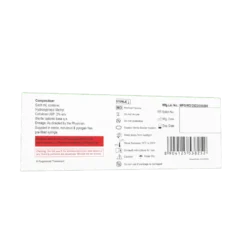
APPAVISC PFS 2mL or 3mL packed in 3mL syringe with one sterilized disposable cannula.
Waste Disposal Method: Dispose in accodance with local, state and federal regulations.
STORAGE
Store in a dry Place. Store away from sunlight. Store between 15°C to 25°C.
HOW SUPPLIED
APPAVISC PFS is a sterile , single use viscoelastic device supplied in a non-pyrogenic Syringe containing 2mL or 3mL with single use sterile angular cannula 23 G.
® Registered Trademark