
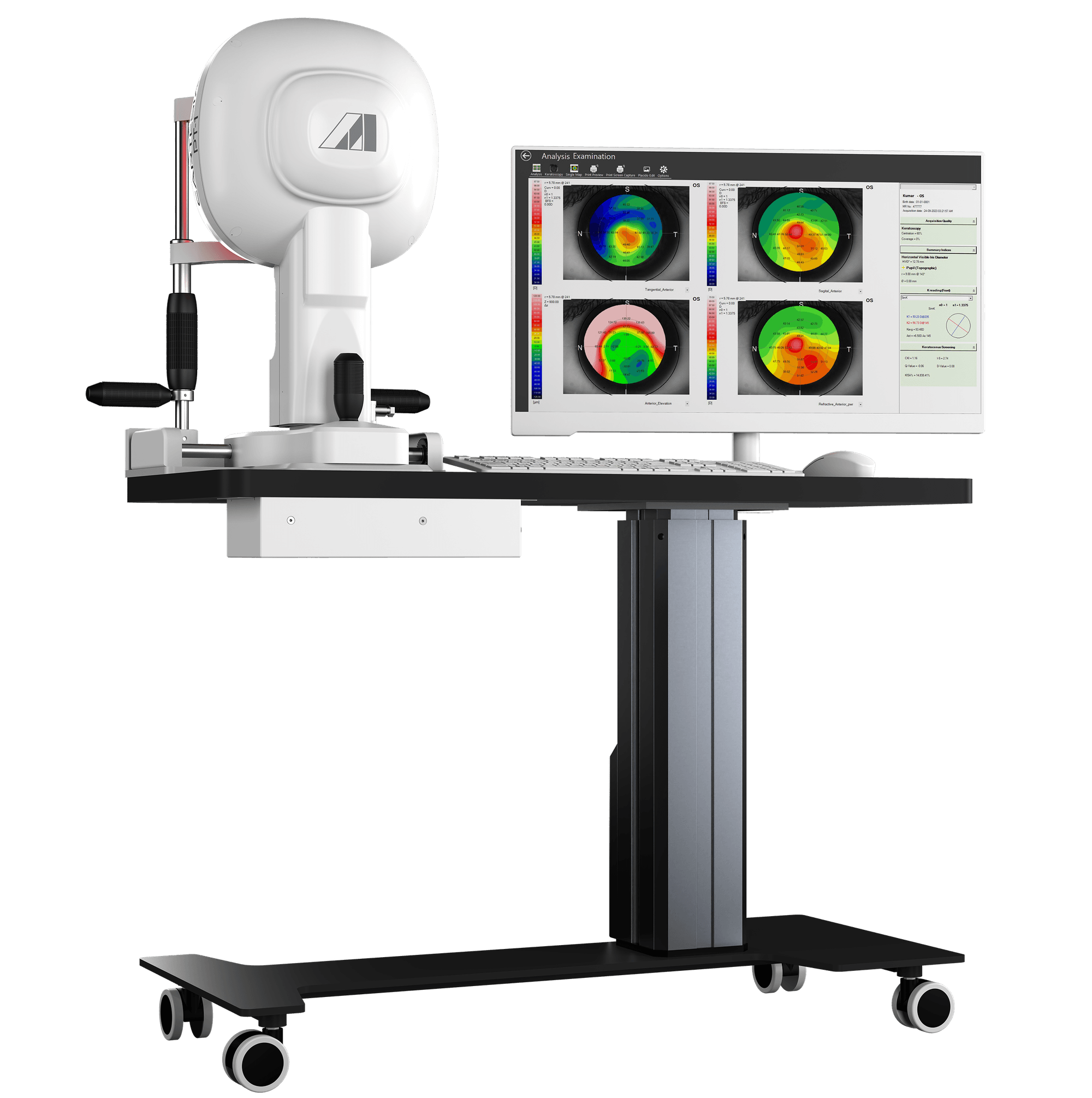
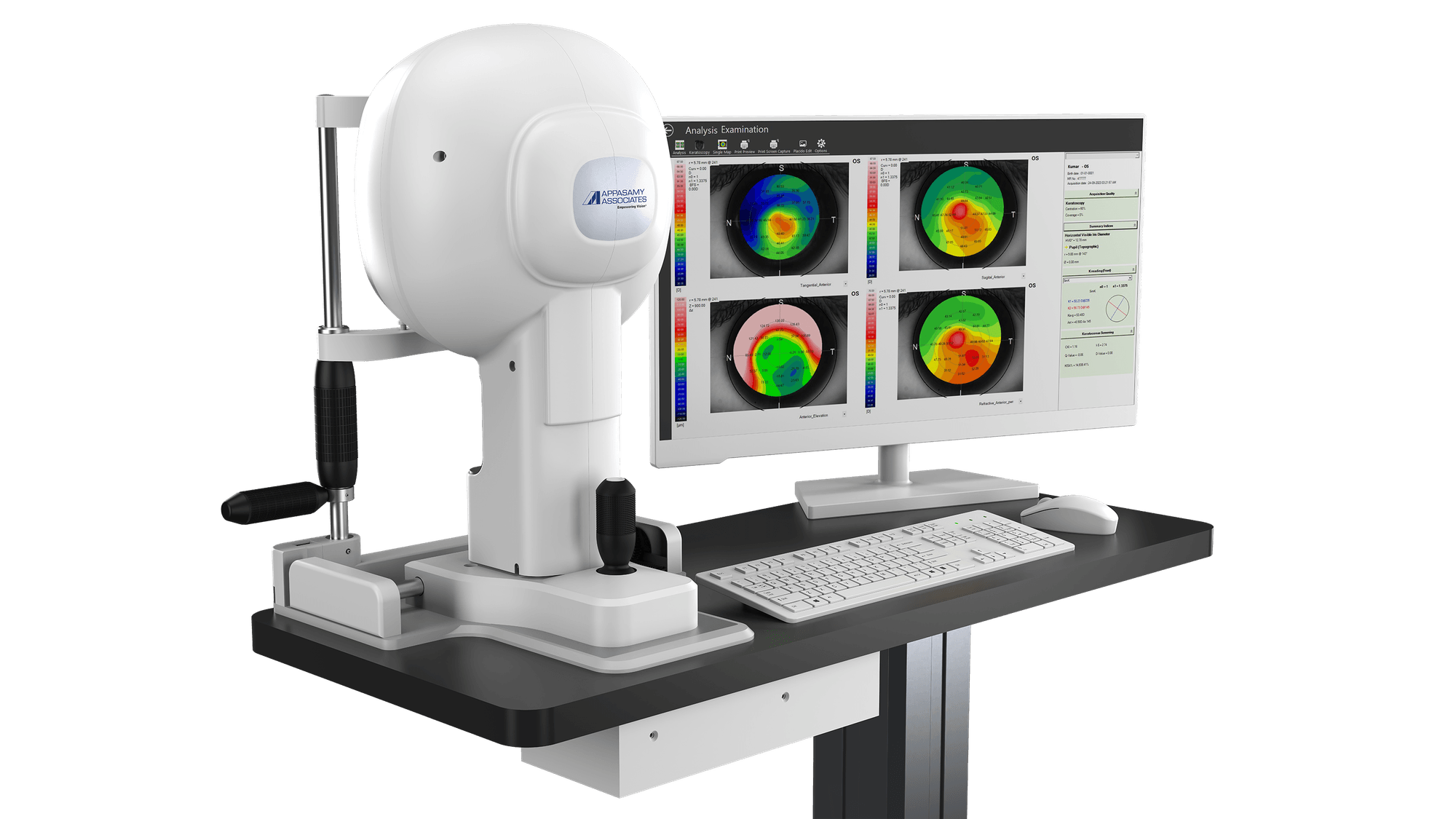
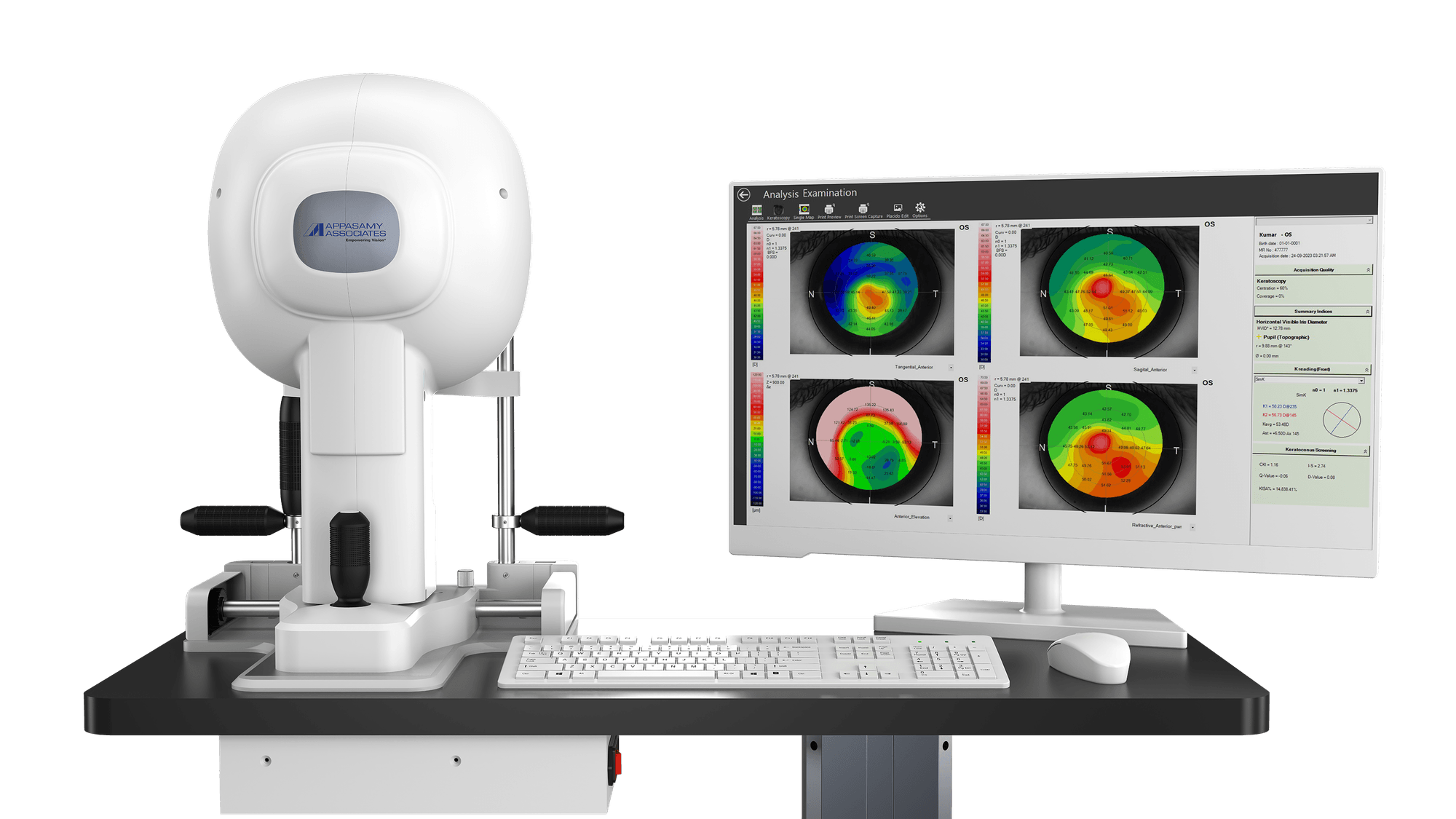
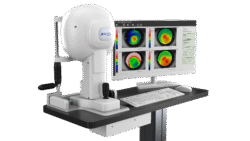
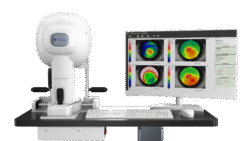


CORNEAL TOPOGRAPHER Model Name : Cartesia Model Number: PT-1
Topography Module
Provides precise analysis of the anterior corneal curvature and concentricity
Performs comprehensive imaging and delivers data by utilizing Placido based videokeratoscopy with Scheimpflug tomography
Topography maps and indices
Multiple maps for accurate diagnosi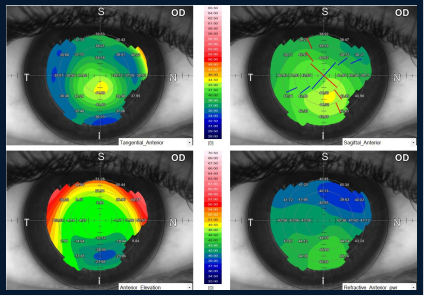
Acquisition and image processing
Smooth focus assistant system with Auto shot option enables non-touch capture as soon as focus is achieved.
Advanced deep learning algorithms for image processing and it enhances accuracy of resultant topography maps; along with crucial pre-operative parameters while planning for refractive or cataract surgery.
Sagittal Anterior Map
Sagittal Anterior Map gives information about Radius and diopter information of each point with respect to optical axis of the eye
Tangential Anterior Map
Tangential Anterior Map gives information about Radius and diopter information of corneal surface measured instantaneously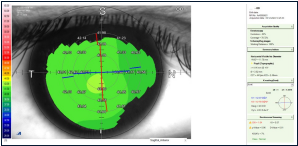
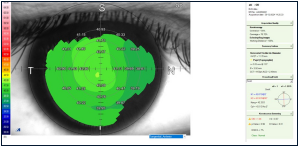
Refractive Anterior Map
Refractive Anterior Map gives total corneal refractive power Provides single and dual multimap view with preferred scale customization
Anterior Elevation Map
Anterior Elevation Map gives detailed information about the shape and contour of the cornea. It determines areas of elevation or depression relative to a reference shape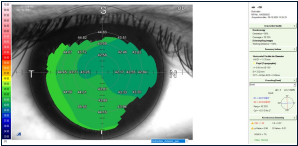
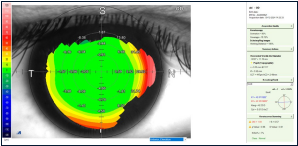
Zernike Analysis
Zernike analysis for refractive information from spherical to higher order aberrations
Topography Report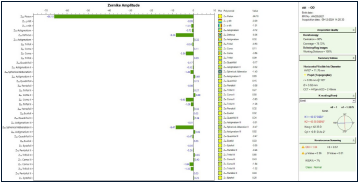
Dry Eye analysis
All-in-one unit- a complete solution for all dry eye examination needs
Cartesia is equipped with extensive dry eye examination module which consists of key dry eye evaluation procedures like
- Meibography
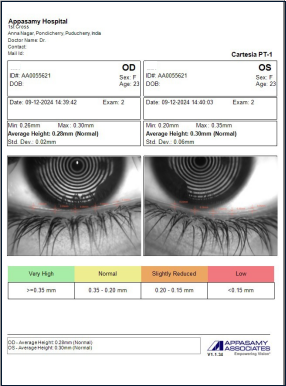
- Tear meniscus height analysis
- Tear film breakup time
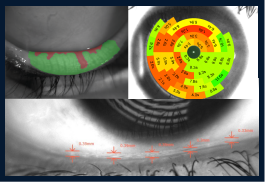
Meibography
- Infrared Visualization
- IR rays facilitates the detection of Meibomian Gland Dysfunction (MGD) which occurs due to lipid layer deficiency of the tear film using infrared light
- Automated analysis
- Automated analysis of the image simplifies the diagnosis process for the user
- Easy interpretation
- The results would be a displayed in comprehensive, color-coded grading framework which is quick
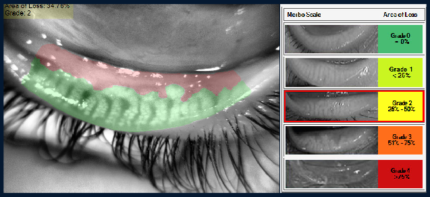
Tear meniscus analysis
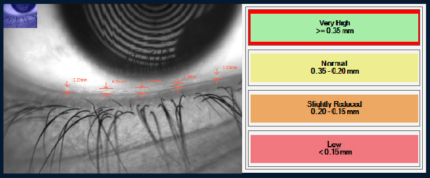
- Severity grading with colour coding aids in clear Identification of the condition
- Quantitative and qualitative measurement of tear meniscus
- Tear volume and tear film status can be measured using Tear meniscus height (TMH)
- Accurate auto-segmentation of Tear meniscus
- Precise meniscus height displayed in millimete
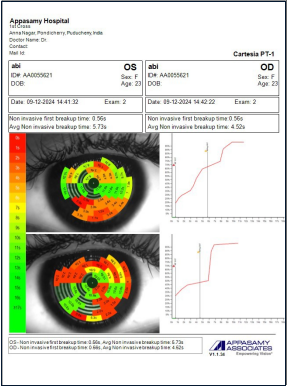
Non invasive tear film breakup time
- Tear film stability assessed with non-invasive tear breakup time analysis
- Quantitative and qualitative measurement of tNon-invasive nature of testing eliminates the need for fluoresce-in staining thereby the tear film remains unaltered prior to measurementear meniscus
- Testing experience with zero irritation or discomfort for patients
- One click video capture makes the acquisition easier
Effortless Data Visualization
- Offers graphical mapping with first breakup time and average tear breakup time
- Intuitive time graph- Easy tracking of tear film stability over time
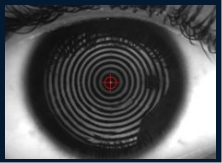
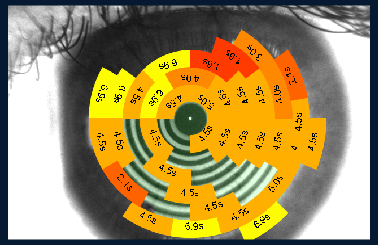
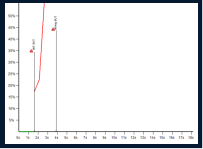
Non invasive tear film breakup time
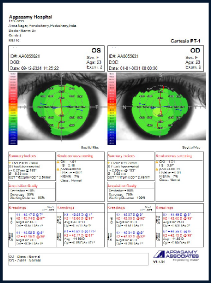
TMH Comparative Report
Pupillography
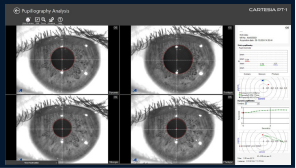
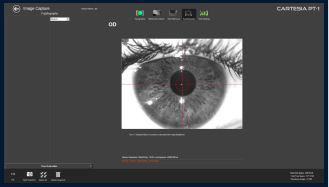
- Capable of dynamic pupil measurement and analysis under Photopic (40 Lux), Mesopic (4Lux) and Scotopic (0.04 Lux) conditions
- Crucial pre-operative measurement in case of refractive surgery or multifocal IOL implantation
Angle kappa
- Angle kappa can be measured in terms of Cartesian and polar forms, under different lighting conditions: Photophic, mesopic, scotopic and dynamic conditions
Keratoconous
Cartesia offers advanced keratometry measurement, providing precise data on corneal curvature. It captures detailed front surface readings, enhancing diagnostic accuracy for ectatic conditions like keratoconus. This feature supports effective surgical treatment planning for corneal procedures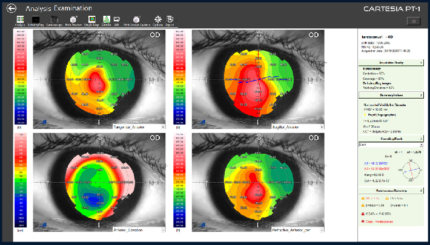
Scheimpflug
A Scheimpflug camera uses the Scheimpflug principle to capture detailed images of the cornea and anterior chamber, enabling measurements like central corneal thickness and anterior chamber depth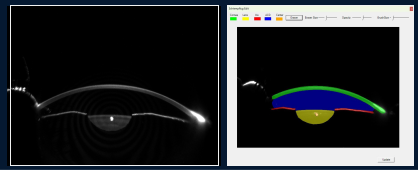
Cataract & LASIK Workup
- Preoperative Assessment
- Corneal Shape Analysis with Axial, Tangential, Elevation, Refractive Maps
- SIM-K and Multizone Curvature
- Multi-Exposure Pupillometry with Angle Kappa
- Zernike Polynomial for Higher Order Aberration
- Keratoconus Assessment
- Anterior Measures (ACD, CCT and WTW)